
In May, Satpal Singh, who runs a dairy business with three buffaloes in Jewar, near Noida, was worried about the steep spike in input costs. Singh said dry fodder rates, which cost Rs 1,500-2000 per tractor trolley last year, were quoting at Rs 4,500-5,000. The price of other cattle feed ingredients (that include mustard meal and similar mixes) had also gone up from Rs 2,000 per quintal to Rs 3,100-3,200 per quintal.

Microsoft has become the first global Big Tech company to join the Open Network for Digital Commerce (ONDC), an Indian government initiative for developing a first-of-its-kind open network for digital commerce. The world's second-largest technology firm intends to introduce social e-commerce via its app in the Indian market later this year. ONDC is expected to open to the public in Bengaluru over the next fortnight as it enters into the next phase of the pilot for further fine-tuning before rollouts in other cities, according to a source in the know.

Indian consumers are likely to get respite from rising prices just before the festival season. Some consumer companies, including automakers, have indicated that they are planning to pause price hikes just before demand picks up in August, while keeping a close eye on volatile raw material prices.

Consumer-focused companies have been left with few options but to increase the prices of their products as input costs mount because of various factors, including supply chain disruptions. This has been affecting monthly household budgets. Prices of scores of items -- from spices to soaps to rice -- have increased in the past year.

Open Network Digital Commerce (ONDC) has expanded its pilot to 15 more cities. This comes at a time when it plans to begin operations next month. Snapdeal has also signed the onboarding agreement with the network and will debut on it next month. On Monday, ONDC expanded to Noida, Faridabad, Lucknow, Bijnor, Bhopal, Chhindwara, Kolkata, Pune, Chennai, Kannur, Thrissur, Udipi, Kanchipura, Pollachi, Mannar and Ramnathpuram.
Fast-moving consumer goods (FMCG) sales continued to be lower in June compared to May with urban sales witnessing a steeper decline than rural. Sales of goods from shampoos to biscuits stayed lower due to inflationary pressures on commodities. This pushed consumer companies to continue taking price hikes, thus impacting demand, according to data by Bizom.

Even as raw material prices start cooling off from their peaks, fast-moving consumer goods (FMCG) companies' margins are expected to remain under pressure at least in the next quarter. This is because commodity prices continue to remain high year-on-year (YoY). Consumer companies will also continue to increase rates as they have been taking price hikes in a staggered manner. They have not yet passed the entire price increase of raw materials to consumers.

Parle Agro, which sells beverages such as Frooti in small tetra packs, has already started importing paper straws. Dabur India, which sells its fruit juices in tetra packs under the brand Real, is also considering importing paper straws.

'Periods of high volatility are usually bad for mid-caps and this is something that has to be kept in mind.' 'Focus on quality is of paramount importance.'

'Then select those that are well-aligned with your risk-return profile and investment time horizon.'

Analysts believe that investors should look at stocks that hit 52-week lows only if they have a dividend paying track record, are debt-free and have sound fundamentals.

Britannia Industries will take higher grammage cuts instead of increasing prices in a bid to tackle rising inflation, the firm said. The biscuit major took a 10 per cent price hike in financial year 2021-22 (FY22) and resorted to reducing pack sizes as an indirect way of increasing prices. In the previous financial year, the ratio of grammage reduction was 65 per cent, which will be higher in FY23.
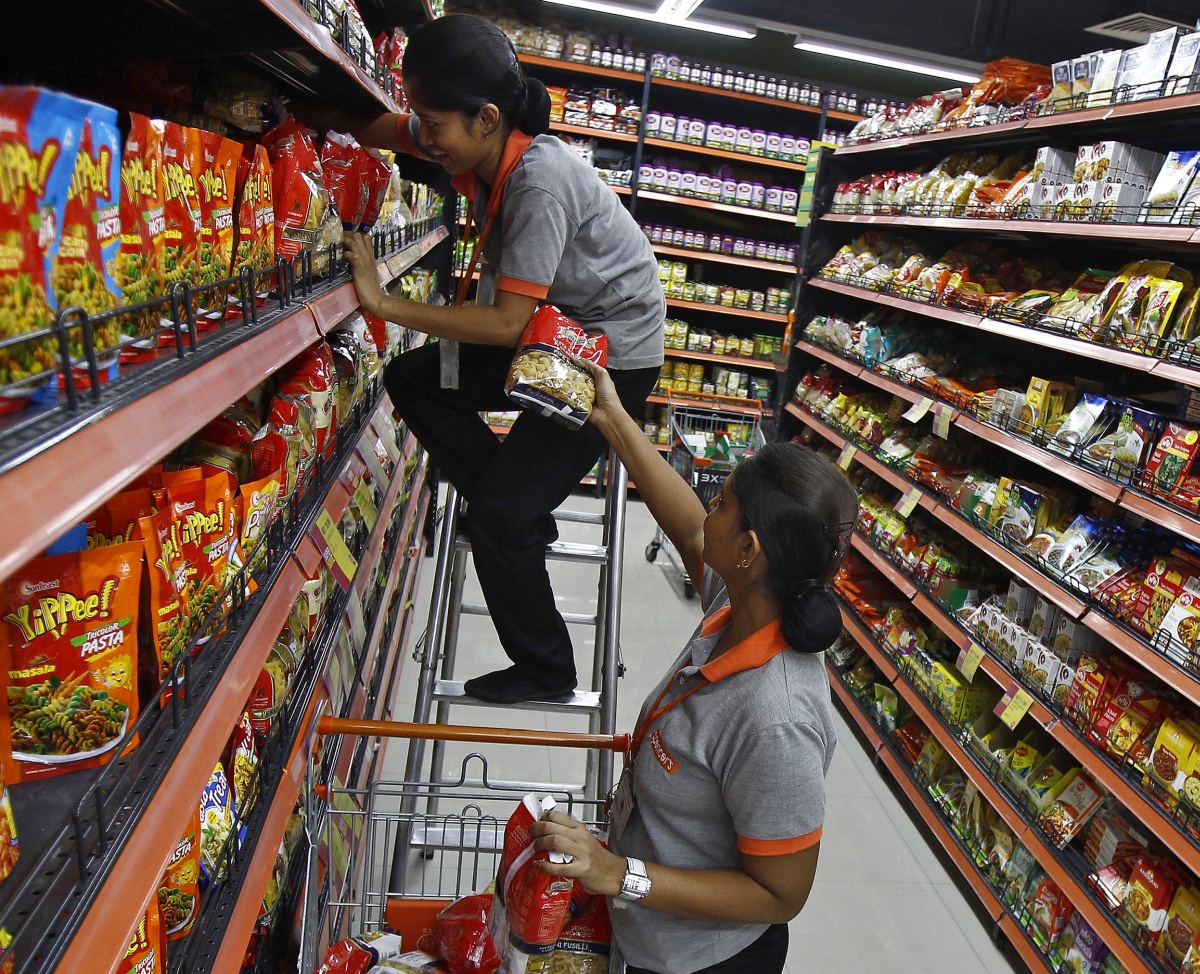
However, rural demand continued to remain a concern for FMCG companies during the quarter.

Shareholders of the six listed Future Group companies voted on Wednesday. Bankers said all the large lenders had rejected the proposal.

Automotive (auto) and consumer appliance companies are hoping for a bounty from the harvest season after two consecutive dry spells in 2020 and 2021. The season, which also marks the beginning of the regional New Year, kicked in across the country from April 1 - Gudi Padwa in Maharashtra; Ugadi in Karnataka, Telangana, and Andhra Pradesh; Bihu in the Northeast; and Chaitra Navratri in the North. Manufacturers and retailers of cars, two-wheelers, and consumer appliances said they have seen demand pick up year-on-year (YoY) at a brisk pace across categories.

'Large-caps are better placed to withstand the impact of higher input cost inflation, rising rates and withdrawal of excess global liquidity.'

Sebi is reportedly examining the matter internally and has reached out to the fund house on the matter.

'With the ease of access, we have seen an increased participation from tier-2, tier-3, and tier-4 cities/towns.'

Virat Kohli has emerged as the most valued celebrity in India for the fifth year in a row, topping the Duff & Phelps Celebrity Brand Valuation Report 2021 despite seeing a dip in his brand value to $185.7 million last year from a high of $237.7 million in 2020. The annual report explained that brand Kohli faced a decline following the cricketer's resignation from the ODI (One Day International) and T20 captaincy and "associated exchanges" with the Board of Control for Cricket in India and recent on-field outcomes. "However, we believe that with the reduced workload after stepping down from captaincy, Kohli can focus now on what he is known for - his batting - and continue his journey on becoming the world's best batsmen," it added.

'It will be a cat and mouse game between investors and the government.' 'The issue will be launched only if there is sufficient demand from investors and the government is in agreement with the bankers on the valuations.'
 © 2026 Rediff.com - Advertise with us - Disclaimer - Privacy Policy - Sitemap - Feedback - About us - Terms of use - Grievances